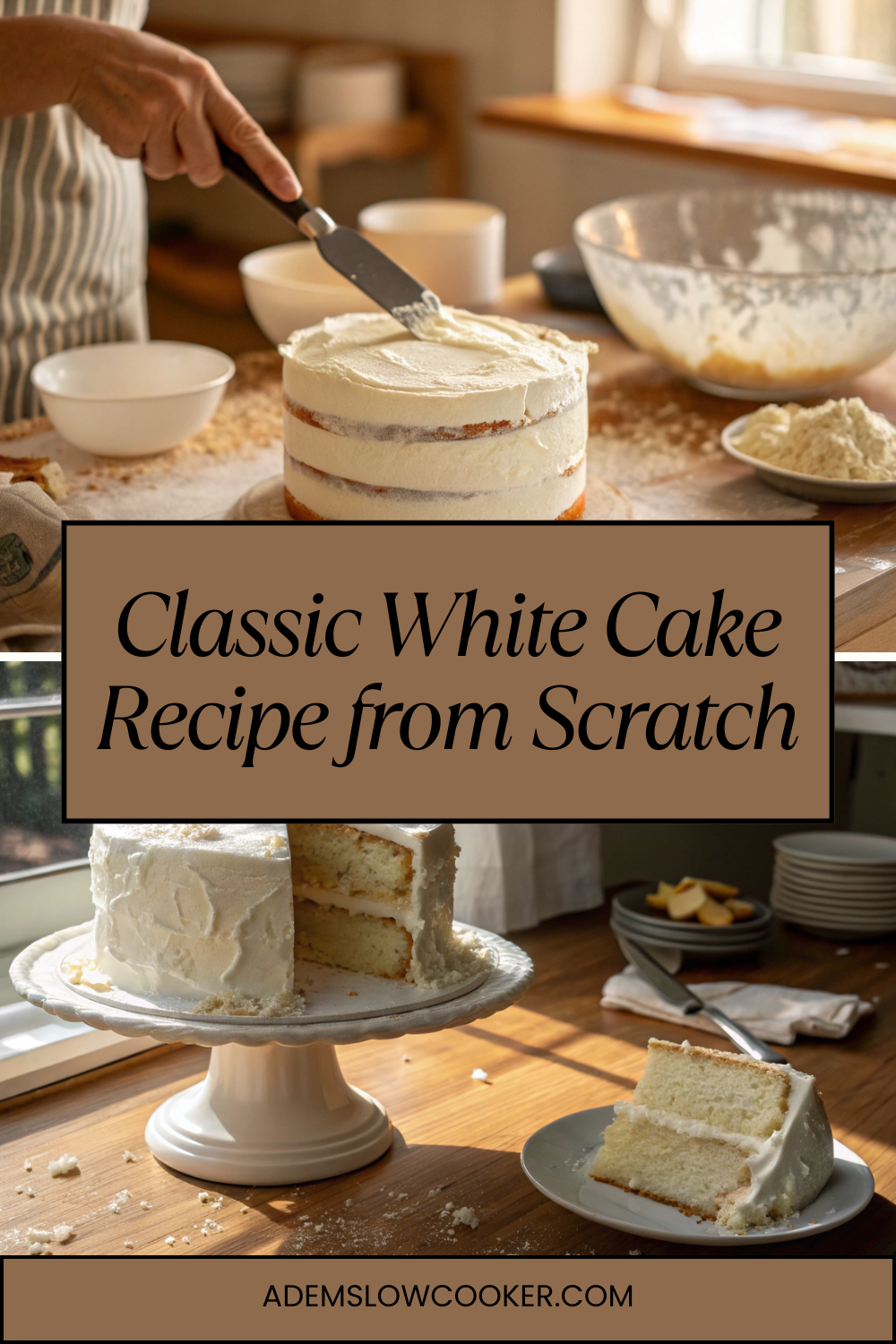

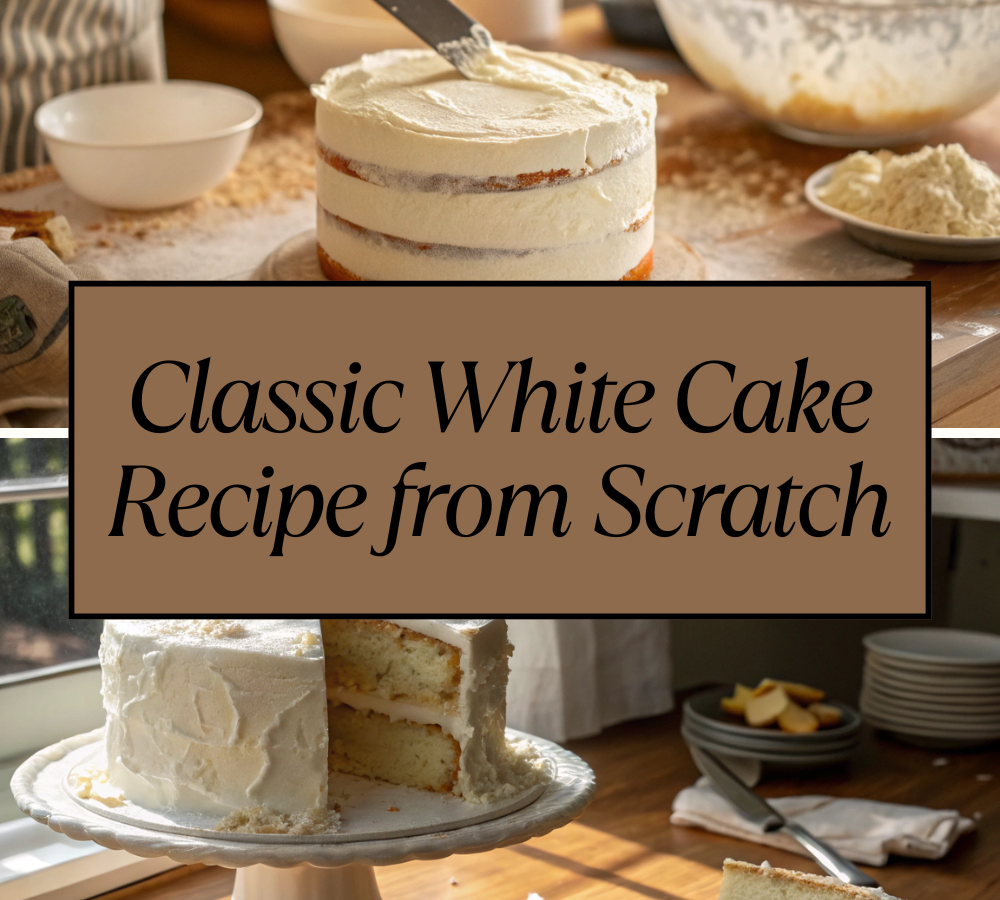
White Cake Recipe
I avoided making homemade white cake for years because every version I tried either came out dry, weirdly dense, or somehow both at the same time. One birthday, I attempted a layer cake for my niece and ended up with something that looked decent on the outside but crumbled apart the second I sliced it. We still ate it, but barely.
After a lot of testing and one particularly frustrating afternoon involving three failed cake layers, this became the white cake recipe I actually trust. It’s soft, light, stays moist for days, and works for birthdays, baby showers, holidays, or honestly just random weekends when somebody wants cake.
Why This Recipe Works
Here’s the thing about white cake: it sounds simple, but it’s surprisingly easy to mess up. What I figured out is that cake flour and whipped egg whites make all the difference. The cake flour keeps the texture soft, while the whipped egg whites give the cake that fluffy bakery-style crumb without feeling heavy.
I also stopped overmixing the batter. That alone fixed half my problems. The minute the flour disappears, I stop stirring.
Ingredient Notes
Cake flour matters here. I tried using all-purpose flour during a grocery store emergency once, and the texture turned noticeably heavier. Still edible, just not that soft classic white cake texture.
For the almond extract, don’t overdo it. Even a tiny bit gives that bakery-style flavor people recognize, but too much starts tasting like frosting instead of cake.
And use room temperature butter, milk, and egg whites. Cold ingredients never blend properly and usually leave little lumps in the batter.
How to Make It
Start by preheating the oven to 350°F and greasing two 8-inch cake pans. I also line the bottoms with parchment paper because I’ve had too many cakes stick over the years and I’m no longer willing to risk it.
In one bowl, whisk together the cake flour and baking powder. In another larger bowl, beat the butter and sugar until pale and fluffy. This takes longer than people think — usually around 3 to 4 minutes. The mixture should look lighter in both color and texture.
Add the vanilla and almond extract, then slowly mix in the milk. The batter might look slightly uneven at this point, which is normal.
In a separate clean bowl, beat the egg whites until soft peaks form. Don’t crank the mixer to the highest speed immediately. I used to do that and ended up with stiff dry egg whites that refused to fold into the batter smoothly.
Gently fold the dry ingredients into the butter mixture, then carefully fold in the whipped egg whites. The batter should look light and airy without big streaks remaining.
Divide the batter evenly between the pans and bake until the tops are lightly golden and a toothpick comes out clean. My oven usually takes about 24 minutes, but I start checking early because every oven lies a little.
The cakes should spring back lightly when touched and smell buttery and sweet without looking overly browned.
Things I Learned the Hard Way
Don’t open the oven door constantly while the cakes bake. I did that during one birthday cake disaster and the centers collapsed completely.
If your egg whites accidentally get even a tiny bit of yolk in them, they won’t whip properly. I usually separate eggs into a small bowl one at a time first instead of directly into the mixer bowl.
People always ask if this works for cupcakes. It does. I usually get about 18 cupcakes and bake them around 18 minutes.
And let the cake cool fully before frosting it. I rushed once and watched buttercream slide slowly off the sides like melting ice cream.
Storage & Serving Suggestions
This cake stays soft for about 3 days covered at room temperature or up to 5 days refrigerated. I usually let refrigerated slices sit out for 20 minutes before serving so the texture softens again.
It works really well with vanilla buttercream, fresh berries, whipped frosting, or even lemon curd between the layers if you want something less sweet.