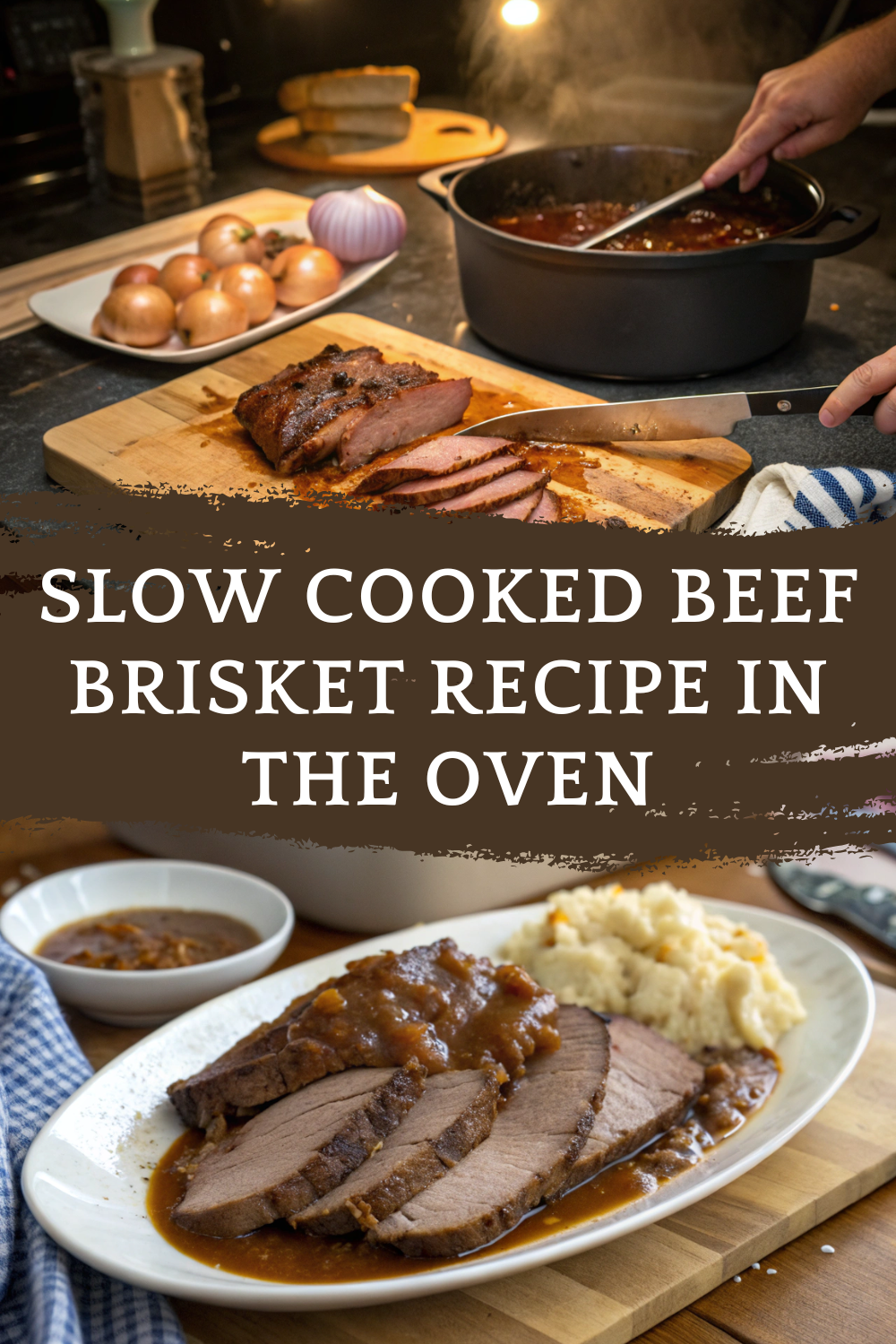

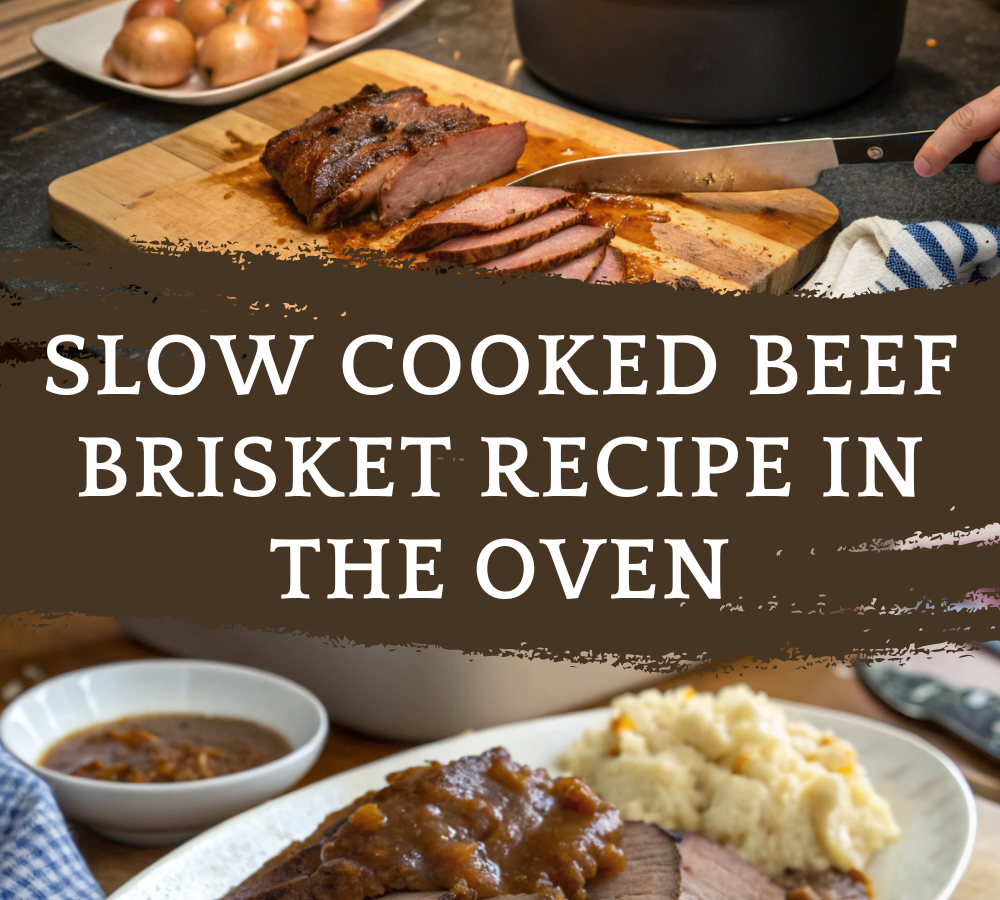
The first time I made brisket, I ruined a four-pound piece of beef so badly my brother still brings it up every Thanksgiving. I cooked it too hot, sliced it the wrong direction, and somehow managed to dry out something that spent hours in liquid. After a few more tries — and one very helpful conversation with a butcher at a small meat market near me — I finally figured out what actually works.
Now this slow cooked beef brisket is the meal I make when I need something dependable. It’s the kind of dinner that fills the whole kitchen with that deep onion-and-garlic smell after a couple hours, and people start wandering in asking when it’ll be ready.
Why This Recipe Works
Here’s the thing with brisket: it’s not difficult, but it absolutely punishes impatience. What I figured out is that low heat, enough broth, and letting the meat rest properly make all the difference. I also stopped drowning it in sugary barbecue sauce years ago. This version leans savory with smoked paprika, garlic, onions, and just enough brown sugar to round everything out. The beef ends up tender enough to slice with a fork, but it still holds together instead of turning into shredded pot roast.
Ingredient Notes
I use low-sodium beef broth because the brisket cooks for hours and the sauce reduces quite a bit. The first time I used regular broth plus the full salt amount, it got saltier than I wanted by dinner time.
Smoked paprika matters here. Regular paprika works in a pinch, but smoked paprika gives that slow-cooked, almost outdoor barbecue flavor without needing a smoker.
And don’t skip the apple cider vinegar. It doesn’t make the brisket taste tangy — it just balances the richness so the whole thing tastes less heavy.
How to Make It
Start by patting the brisket dry really well with paper towels. If the surface is wet, it won’t brown properly, and that crust adds a ton of flavor later. Mix the kosher salt, black pepper, smoked paprika, garlic powder, onion powder, chili powder, cumin, and brown sugar together, then rub it all over the meat.
Heat olive oil in a large Dutch oven or deep skillet until it’s shimmering. Sear the brisket for a few minutes per side until you get a dark brown crust. Not gray. Brown. I used to move it around too early and lost all that flavor. Let it sit untouched long enough to actually caramelize.
Once the brisket is browned, pull it out and add the sliced onions to the pot. They’ll look like way too many onions at first, but they cook down a lot. Stir them around until soft and golden, then add the garlic and tomato paste. The tomato paste should darken slightly and smell sweeter after a minute or two.
Pour in the beef broth, Worcestershire sauce, and apple cider vinegar, then scrape the bottom of the pot with a wooden spoon. Those browned bits are what make the sauce taste like it cooked all day — because it did.
Add the bay leaves and thyme, then return the brisket to the pot. The liquid shouldn’t completely cover the meat. About halfway up the sides is perfect.
Cover tightly and cook low and slow in the oven until the brisket is fork tender. Mine usually takes around 4 hours, sometimes a little longer if the cut is thick. You’ll know it’s ready when a fork slides in with almost no resistance.
The hardest part is waiting before slicing. Let the brisket rest at least 15 minutes so the juices stay inside instead of running all over the cutting board.
Things I Learned the Hard Way
Slice against the grain. Every single time. If you cut with the grain, the brisket will seem chewy no matter how long you cooked it.
Don’t panic if the brisket feels tough after 2 or even 3 hours. Brisket has a stubborn stage where it tightens up before it finally relaxes and turns tender.
I also learned not to trim off all the fat. Leave a thin layer because it keeps the meat moist while it cooks.
And if your sauce looks thin at the end, just remove the brisket and simmer the liquid uncovered for 10 minutes. I used to add cornstarch, but honestly, reducing it tastes better.
Storage & Serving Suggestions
This brisket keeps really well in the fridge for about 4 days, and somehow tastes even better the next day. I store the sliced meat right in the sauce so it doesn’t dry out.
For reheating, I warm it slowly in a covered skillet with some extra broth. We usually serve it with mashed potatoes, roasted carrots, or thick slices of toasted bread to soak up the sauce.