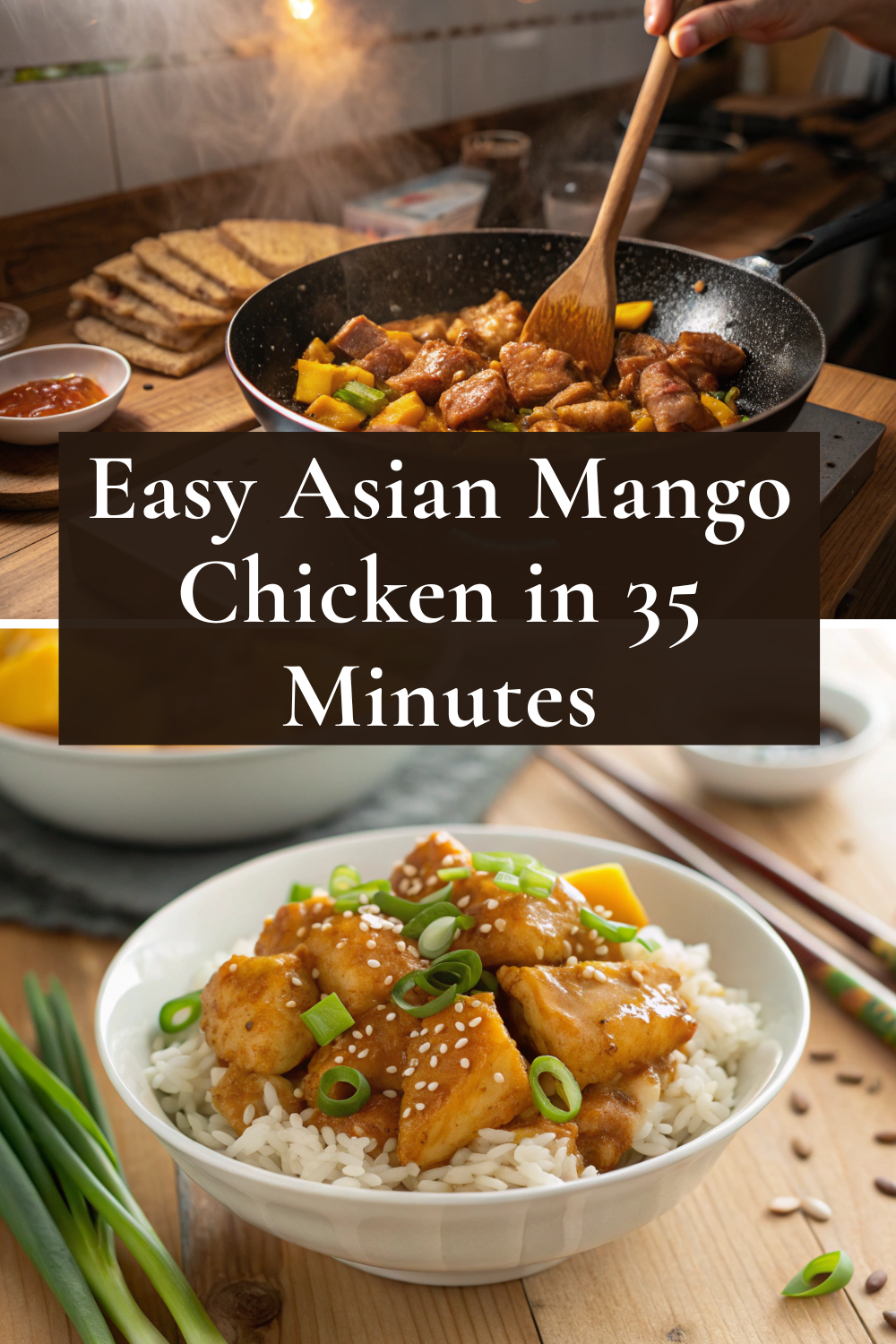

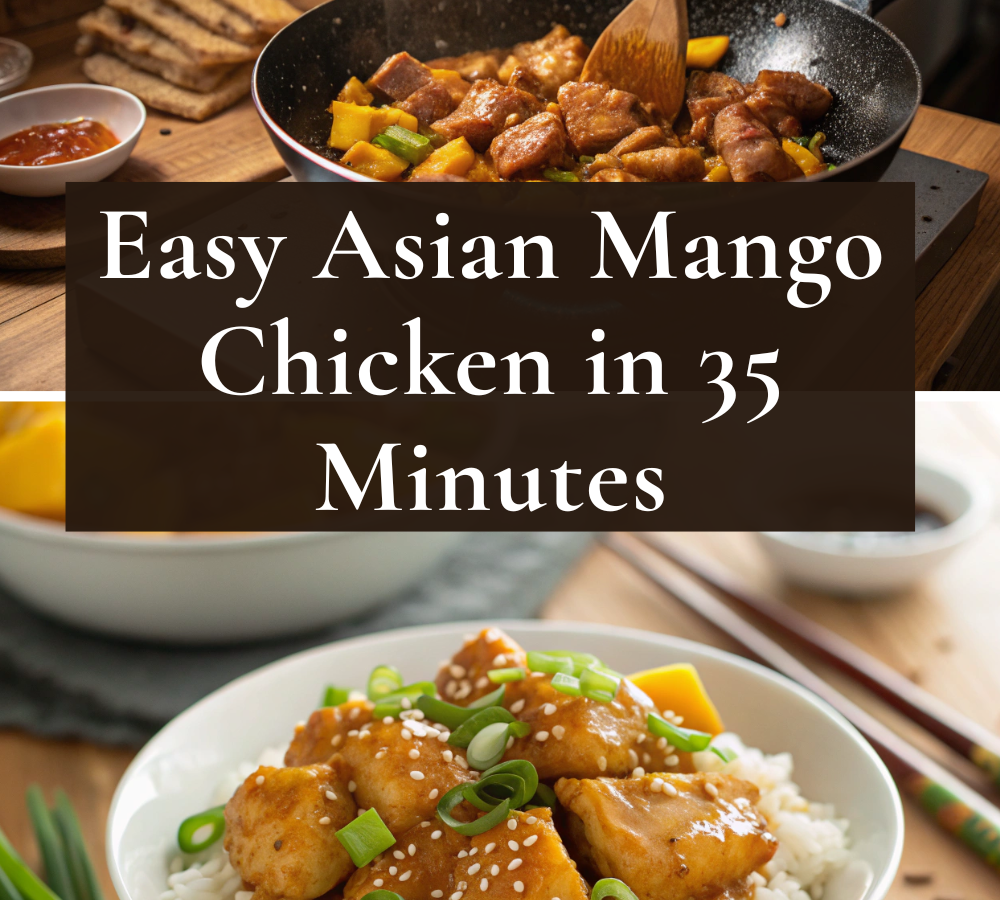
Asian Mango Chicken
The first time I made mango chicken, I was honestly just trying to use up two overripe mangoes sitting on my counter before fruit flies claimed them first. I threw together a quick sauce with soy sauce, garlic, and ginger, hoping for something halfway decent. My husband ended up scraping the pan for the last spoonful of sauce and asking if I could make it again the next night.
Now this recipe shows up constantly in my kitchen, especially during busy weeks when I need dinner to feel a little different without creating a mountain of dishes. It’s one of those meals that looks like you spent way more effort on it than you actually did.
Why This Recipe Works
Here’s the thing about mango chicken: a lot of recipes end up way too sweet. What I figured out after testing this a few times is that the balance matters more than the mango itself. The soy sauce, garlic, lime juice, and ginger cut through the sweetness so the sauce tastes fresh instead of syrupy. Using chicken thighs also keeps everything juicy, even if you accidentally cook it a couple minutes too long like I did the first time.
Ingredient Notes
Use ripe mangoes that feel slightly soft when squeezed. If they’re rock hard, the sauce won’t blend smoothly and the flavor stays kind of flat. I usually use Ataulfo mangoes when I can find them because they’re less fibrous.
For the soy sauce, I use low-sodium because the sauce reduces while cooking. Regular soy sauce can get pretty salty fast.
And don’t skip the fresh garlic and ginger. I tried bottled versions during one rushed weeknight and the flavor just wasn’t the same.
How to Make It
Start by blending the mango, soy sauce, lime juice, honey, garlic, ginger, and a little sesame oil until smooth. The sauce should taste slightly tangy with a little sweetness at the end. If it tastes like straight mango puree, add another splash of soy sauce or lime juice.
Cut the chicken thighs into bite-sized pieces and season lightly with salt and pepper. Heat a large skillet over medium-high heat with a little oil. Once the pan is hot, add the chicken in a single layer. Don’t overcrowd it or the chicken steams instead of browning. I learned that the annoying way after ending up with pale gray chicken one night.
Cook the chicken until the edges turn golden and slightly crispy. Then pour in the mango sauce. It’ll look thin at first, but after a few minutes it thickens into a glossy coating that sticks to the chicken.
Once the sauce starts bubbling gently, lower the heat and stir occasionally so the sugars don’t stick to the pan. The kitchen smells sweet, garlicky, and a little citrusy at this point, which usually brings people wandering into the kitchen asking when dinner’s ready.
Right before serving, I add sliced green onions and sesame seeds on top for a little crunch and freshness.
Things I Learned the Hard Way
Don’t use frozen mango chunks straight from the freezer unless you thaw them first. I did that once and the sauce turned watery instead of smooth.
If your sauce gets too thick, add a splash of chicken broth or water. Mango can vary a lot depending on how ripe it is.
People always ask if they can use chicken breast instead of thighs. You can, but keep an eye on it because breast meat dries out faster. I still think thighs taste better here.
And if the sauce starts burning around the edges of the pan, lower the heat immediately. Mango and honey caramelize faster than you’d expect.
Storage & Serving Suggestions
This keeps really well in the fridge for about 4 days. I usually reheat it gently in a skillet with a splash of water so the sauce loosens back up.
Serve it over jasmine rice, coconut rice, or noodles. I’ve also stuffed leftovers into lettuce wraps for lunch the next day and honestly liked them even better.