

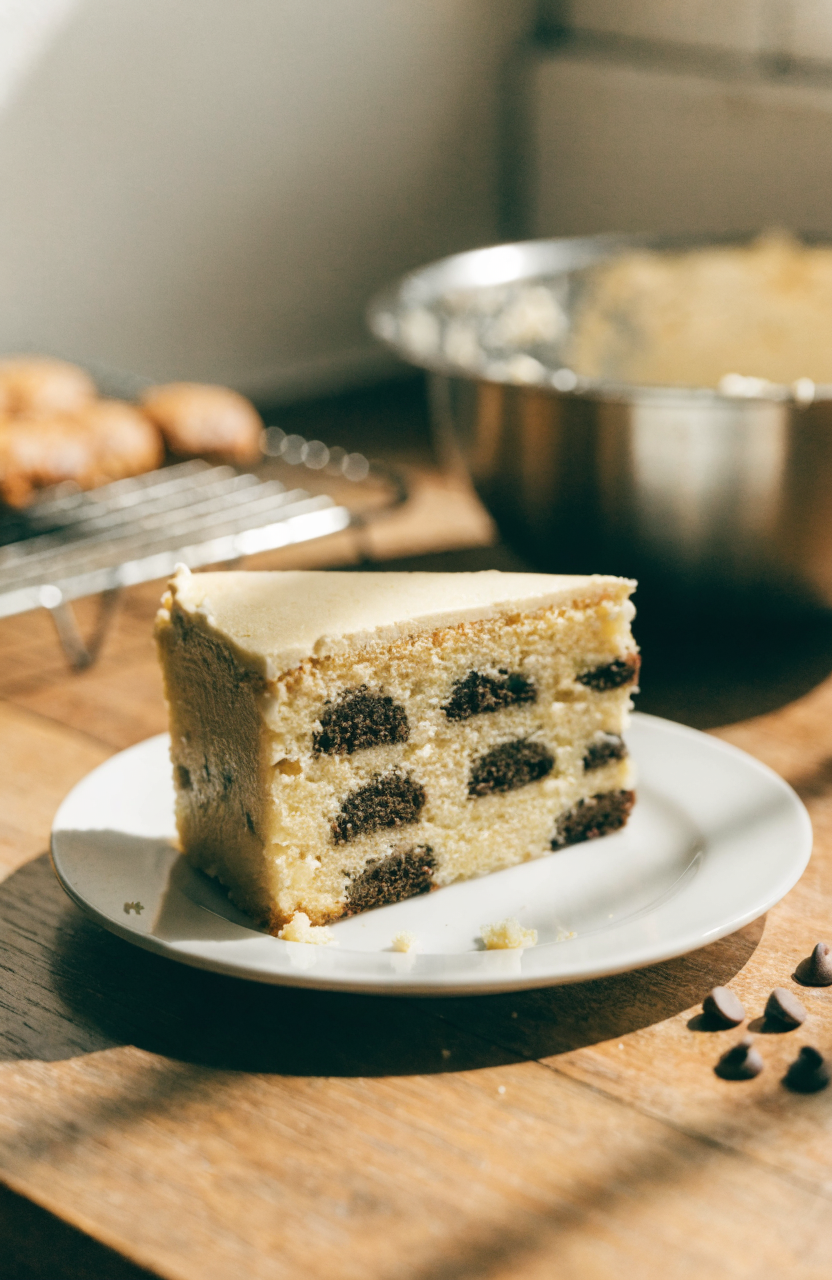
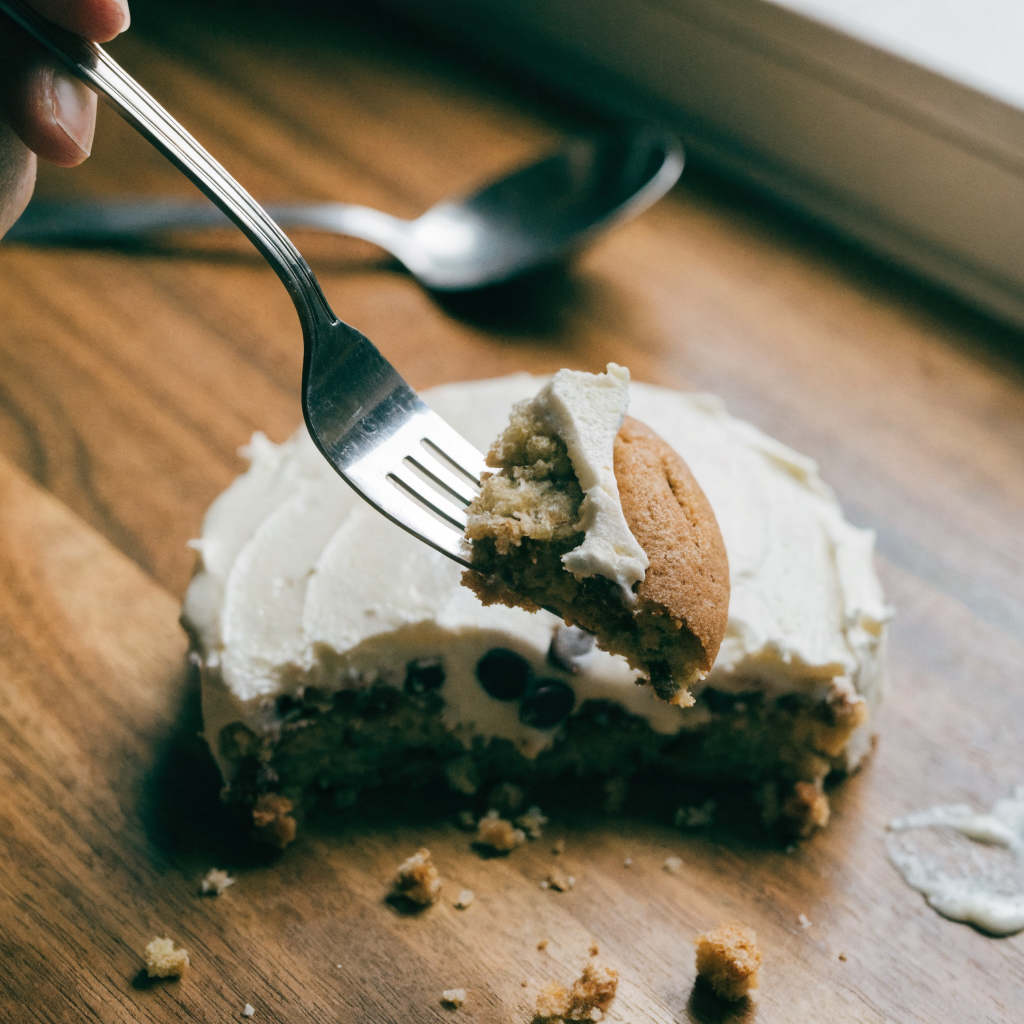
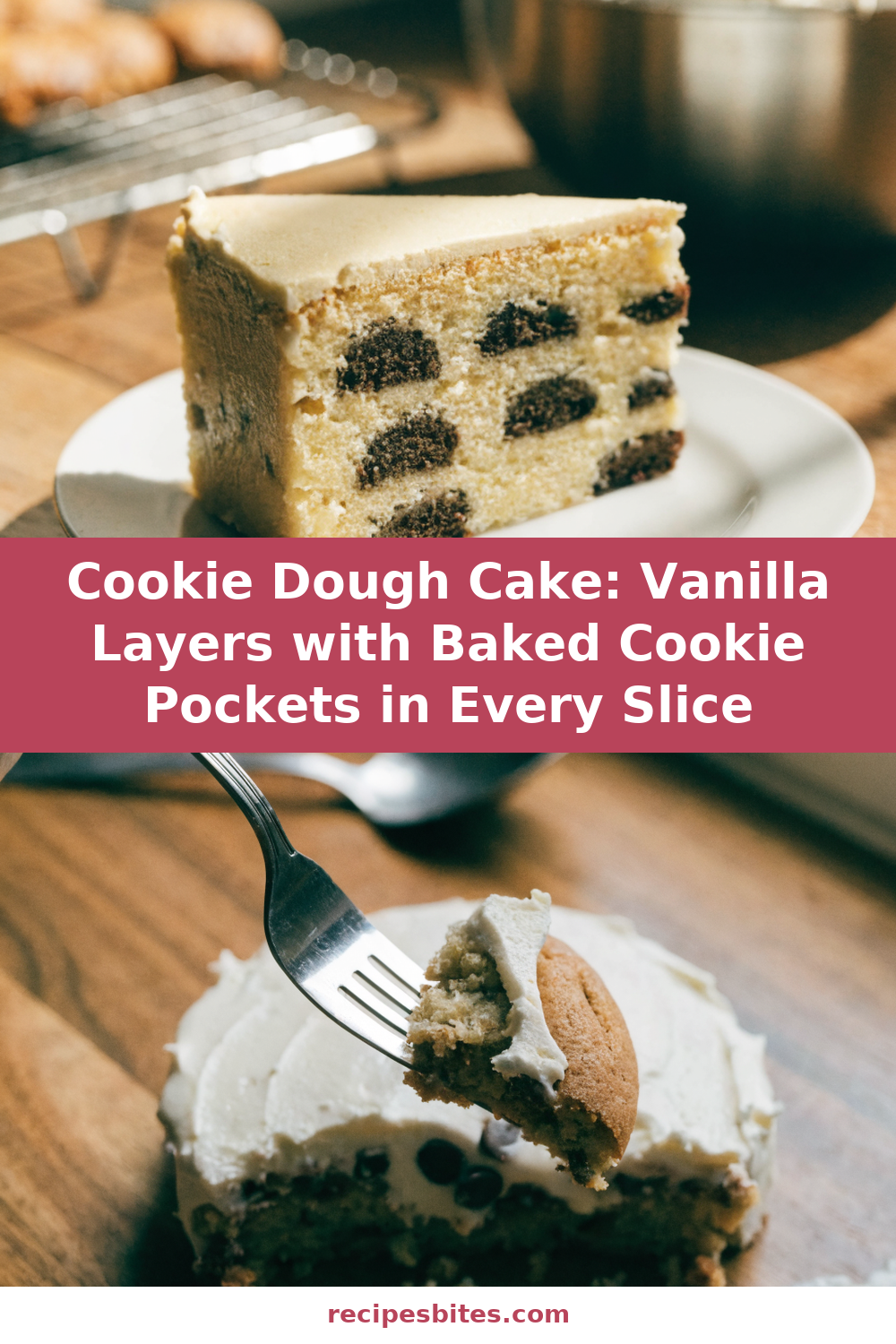
I remember the first time I tried to tuck raw cookie dough into a cake layer—by the time the cake baked the dough either vanished into the crumb or left a gummy, undercooked center. That’s why I developed this cookie dough cake method: the cookie dough is slightly stabilized and portioned so it keeps shape and soft texture after baking. The cookie dough cake finishes with pockets of chewy, lightly baked cookie in every slice and a tender vanilla cake surrounding them.
Why this cookie dough cake works
The key technique is making a cookie dough that’s safe to bake and stable enough to hold shape inside a cake layer. I use a small amount of cornstarch and gently bake the dough pieces inside the cake so they firm up but remain soft—think chewy cookie pockets, not raw batter. Also, slightly undermixing the cake batter and folding in a tablespoon of extra flour for structure keeps the cake tender while preventing the cookie dough balls from sinking or dissolving into the cake during baking. During testing I first tried regular raw cookie dough and the centers never set; the fix was reducing egg in the dough, cooking the dough pieces slightly before assembling, and using cornstarch to improve structure.
Key takeaways
- Use a stabilized, reduced-egg cookie dough with a little cornstarch for bake-safe pockets.
- Partially prebake or chill cookie dough balls so they hold shape inside cake layers.
- Adjust cake batter mixing and strength so layers remain tender but support the cookie pieces.
Ingredients you’ll need and what to substitute
This recipe has two components: a simple vanilla layer cake and a safe, edible cookie dough that bakes inside each layer. I use common pantry ingredients so substitutions are easy. For the cookie dough, I lower the egg (only one egg for the whole dough) and add 1 tablespoon cornstarch; you can omit the egg entirely and replace with 2 tablespoons milk for an egg-free cookie-dough option, but the texture will be slightly different. Use unsalted butter for control; if you only have salted butter, reduce added salt by 1/4 teaspoon.
If you want a chocolate-chip cookie-dough pocket, swap 1/2 cup of the flour in the dough for 1/2 cup cocoa powder and use mini chocolate chips so they distribute evenly. For a budget-friendly option, use store-brand granulated sugar and margarine (melting point differs—see notes). If you need the cake to be dairy-free, use a cup-for-cup plant-based butter and an equal dairy-free milk; the structure holds but flavor shifts slightly.
Equipment
You don’t need special tools, but a few items make this easier: a 9-inch round cake pan set (two pans), a stand or hand mixer, a medium cookie scoop for uniform dough balls, and a cooling rack. If you don’t have two pans, you can bake layers sequentially but allow extra cooling time.
How to make cookie dough cake
Make the cookie dough
Start by creaming the butter and sugars until light, then add a single egg and vanilla. Stir in cornstarch and flour briefly so the dough is cohesive but not overworked; you want a slightly dense, scoopable dough. Fold in 3/4 cup mini chocolate chips. Use a small cookie scoop (about 1 tablespoon) to form dough balls, place them on a parchment-lined sheet, and either chill for 30 minutes or bake on a 350°F sheet for 6–8 minutes until the edges set but centers remain soft. Chilling is my preferred shortcut—less oven time and they hold shape better inside the layers.
Make the vanilla cake batter and assemble
Preheat the oven to 350°F and grease two 9-inch round pans, lining the bottoms with parchment. Whisk the dry ingredients in a bowl—flour, baking powder, and a pinch of salt. In a separate bowl, cream butter and sugar until pale; add eggs one at a time, then vanilla. Alternate adding dry ingredients and milk, starting and ending with dry, mixing only until combined. If your batter seems very thin, fold in one extra tablespoon of flour to give it body; the batter should be pourable but not watery.
Divide about two-thirds of the batter between the two pans and spread into an even layer. Arrange chilled cookie dough balls over the batter in a single even ring and some in the center—keep about 12–15 balls per layer depending on size. Gently pour remaining batter on top to cover the cookie dough balls so they are just submerged. Smooth the surface and bake both pans 28–34 minutes at 350°F, rotating halfway, until a cake tester inserted between dough pieces comes out with a few moist crumbs and the edges are set. The cookie dough will have puffed slightly but remain visible as pockets.
Cooling and frosting
Let layers cool in pans for 10 minutes, then invert onto racks. While warm, the cookie pockets may be slightly softer; they firm up as the cake cools. Cool completely before frosting. I use a simple vanilla buttercream—beat 1 cup unsalted butter, add 3–4 cups powdered sugar and 1–2 tablespoons milk to reach spreadable consistency, then spread a thin crumb coat, chill 15 minutes, and finish with a final coat. If you want visible pockets on the cut slices, use a thin or transparent glaze instead of thick buttercream.
Things I learned the hard way
1. Don’t use raw cookie dough with full eggs—centers stayed undercooked. Reducing egg and adding cornstarch fixed it.
2. Cookie dough balls that aren’t chilled or slightly prebaked can sink and dissolve into the cake—chilling for 30 minutes is an easy fix.
3. Overmixing the cake batter leads to a dense crumb that swallows the cookie pockets—mix only until combined.
4. Using full-size chocolate chips makes large voids when chips melt—use mini chips for even distribution.
5. Baking at too high a temperature browns the cake edges before the center sets where cookie dough sits—350°F and rotating pans midway helps even baking.
6. First attempt: I tried dropping large scoops of dough into a single tall layer; they sank entirely. The adjustment was using two thinner layers and distributing smaller dough balls.
Variations to try
1) Browned-butter cookie dough cake: brown the butter in the cookie dough for nutty flavor—use cooled brown butter and reduce oven prebake by a minute.
2) Double chocolate: add 1/3 cup cocoa to the cake batter and use chocolate cookie-dough pockets; reduce oven time by 2–3 minutes as chocolate batter bakes a touch faster.
3) Peanut butter cookie pockets: replace 1/3 cup of dough butter with creamy peanut butter and use chopped peanuts; watch for slightly faster spreading and consider chilling longer.
4) Salted caramel finish: drizzle salted caramel over the frosting and sprinkle flaky salt—no bake-time change, but reduce added salt in dough.
Storage, freezing, and reheating
Refrigerate covered for up to 4 days; bring slices to room temperature before serving to restore chew in the cookie pockets (about 20–30 minutes). The cake freezes well: wrap individual slices in plastic wrap and place in a freezer-safe container for up to 2 months. Thaw overnight in the refrigerator and sit at room temperature 30–60 minutes before serving. Freezing may slightly firm the cookie pockets; a short microwave blast (8–12 seconds) gently softens them without melting the frosting.
What to serve with cookie dough cake
Serve it with a simple scoop of vanilla ice cream, a drizzle of hot fudge or caramel sauce, or a side of fresh berries to cut the sweetness. For beverages, a cold glass of milk, cold brew coffee, or a mild black tea pair nicely. These pairings keep the focus on the soft cookie pockets and tender vanilla crumb.

Soft Brown Sugar Rhubarb Cookies
Ingredients
Method
Notes
Frequently asked questions
Can I make the cookie dough without eggs? Yes. Use 2 tablespoons milk or 2 tablespoons cream in place of the single egg; the dough will be slightly softer and should be chilled longer before assembly.
Will the cookie dough be safe to eat raw? This cookie dough includes reduced egg and cornstarch; if you want to eat it raw, omit the egg and use heat-treated flour or toast the flour briefly—see recipe notes. However, the recipe is designed to be baked inside the cake.
Can I use frozen cookie dough balls? I don’t recommend adding them frozen to the batter; they can create cold spots and sink. Thaw in the refrigerator until firm but pliable, then use as directed.
Can I bake this in a 9×13 pan instead? Yes, but bake time increases; use a 9×13 and bake at 350°F for about 35–45 minutes and test for doneness. Arrange the dough balls evenly and expect slightly different pocket distribution.
How can I tell when the cake is done if there are cookie pockets? Insert a tester into a spot between two cookie pockets; it should come out with a few moist crumbs but not raw batter. The cake edges should pull away slightly from the pan and the top should spring back lightly.
Can I double the recipe? Yes, double all ingredients and bake in larger pans or multiple pans; avoid overfilling pans and monitor bake time—extra batter increases bake time by 5–10 minutes depending on pan size.
Closing
This cookie dough cake gives you soft, baked cookie pockets in every slice without the gooey raw centers I ran into at first; the cookie dough cake approach here is practical and reliable and makes a fun celebration dessert. I hope you enjoy the pockets of chewy cookie with each forkful.