
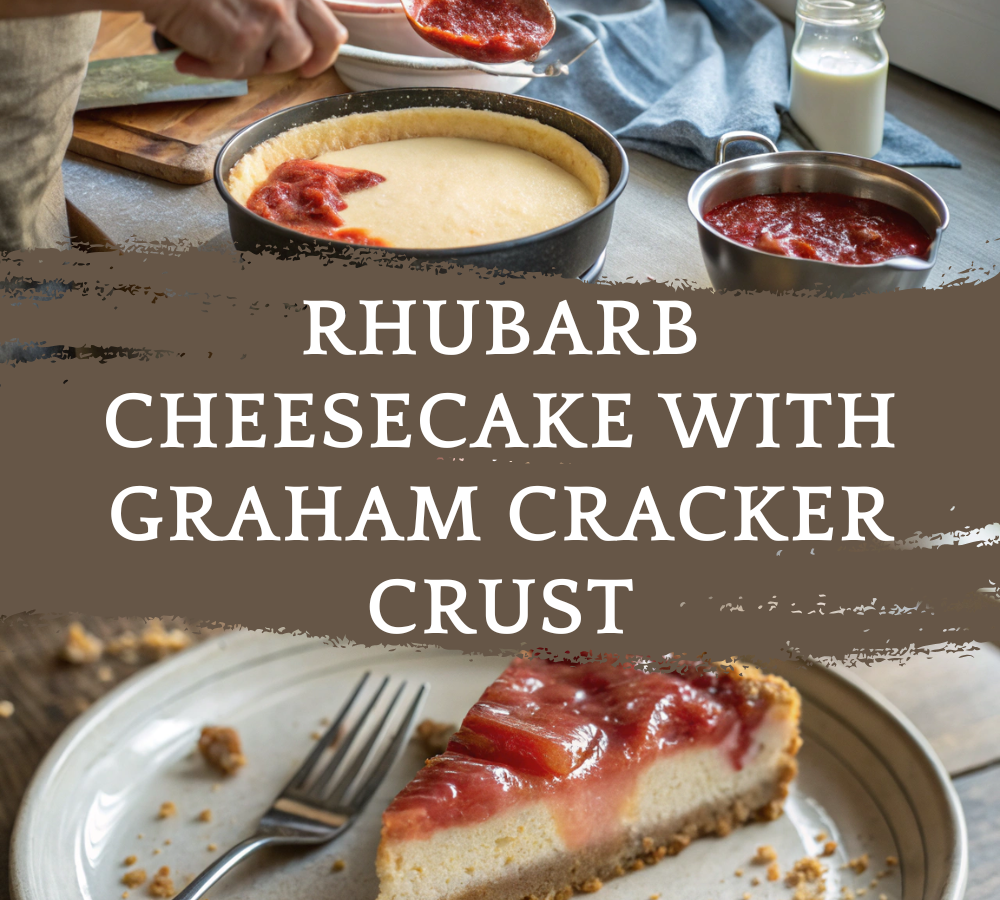
Rhubarb Cheesecake
The first time I made Rhubarb Cheesecake, I honestly wasn’t even trying to make dessert. My neighbor showed up with a giant bundle of rhubarb from her garden and basically forced it into my hands because she had “way too much again this year.” I’d already made muffins and crisp that week, and I was running out of ideas fast.
So I started experimenting and ended up folding tangy rhubarb topping over a creamy cheesecake, mostly hoping it would turn out decent enough to not waste a whole block of cream cheese. Somehow it turned into the dessert everyone now asks about once spring rolls around.
Why This Recipe Works
Here’s the thing about rhubarb desserts: rhubarb can get aggressively tart if there’s nothing creamy to balance it out. That’s why cheesecake works so well here. The filling stays rich and smooth while the rhubarb topping adds just enough sharpness to keep the dessert from feeling too heavy.
What I figured out after a few failed attempts is that cooking the rhubarb separately first makes a huge difference. If you throw raw rhubarb straight into cheesecake batter, it releases too much liquid and messes with the texture.
Ingredient Notes
I use full-fat cream cheese because lower-fat versions tend to get grainy after baking. Philadelphia is usually what I buy because it’s consistent and easy to find.
Fresh rhubarb works best, but frozen rhubarb is completely fine if that’s what you have. Just thaw and drain it really well first or the topping gets watery.
For the crust, I stick with graham crackers because they hold together better than some cookie crusts once chilled overnight.
How to Make It
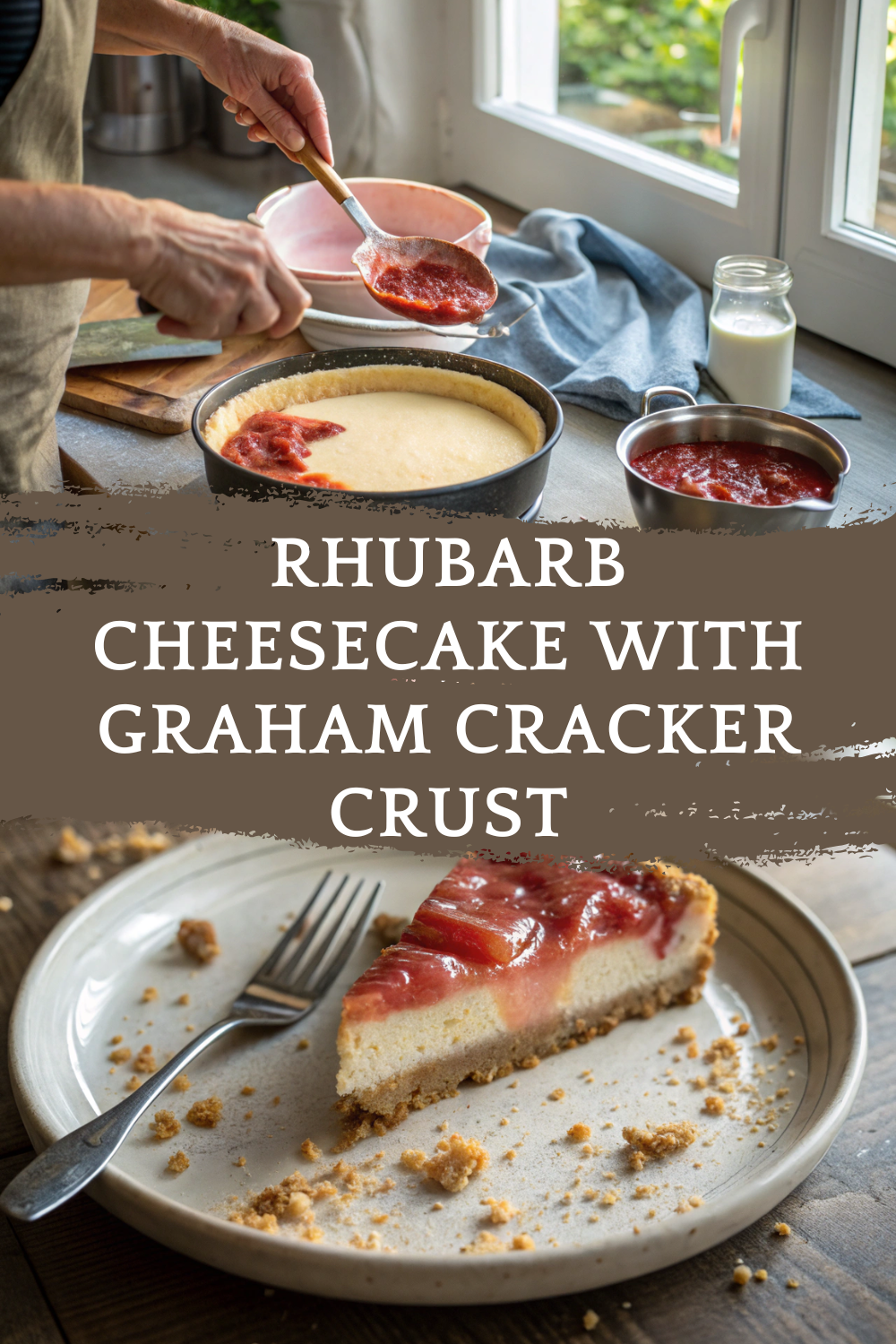
Start with the rhubarb topping first so it has time to cool. Combine chopped rhubarb, sugar, lemon juice, and a splash of water in a saucepan over medium heat. At first it looks like nothing is happening, then suddenly the rhubarb starts collapsing into a soft jammy mixture. Stir it occasionally and don’t walk away too long because it can stick fast near the end.
While that cools, make the crust. Mix graham cracker crumbs, melted butter, and sugar until it feels like wet sand, then press it firmly into the bottom of a springform pan. I use the bottom of a measuring cup to pack it down because my hands always leave uneven spots. Bake it for a few minutes just to help it stay crisp later.
For the cheesecake filling, beat the cream cheese until smooth before adding anything else. That part matters more than people think. If the cream cheese still has lumps early on, they never fully disappear later. Add sugar, sour cream, vanilla, and eggs one at a time until everything looks silky.
Pour the filling into the crust and bake until the edges are set but the center still has a slight wobble. Don’t panic if it jiggles a little. I overbaked my first cheesecake trying to make it “fully done,” and it cracked like dry dirt across the top.
Once cooled, spoon the rhubarb topping over the cheesecake and chill it for several hours before slicing. Overnight is even better if you have patience, which I usually don’t.
Things I Learned the Hard Way
Don’t rush cooling the cheesecake. I tried moving one straight into the fridge while it was still hot and ended up with condensation dripping onto the surface.
Use room temperature cream cheese and eggs. Cold ingredients make the filling lumpy no matter how long you beat it.
And don’t overmix once the eggs go in. Too much air causes cracks during baking.
People always ask if this can be frozen. It can, but I think the rhubarb texture is best fresh within the first couple days.
Storage & Serving Suggestions
Store the cheesecake covered in the refrigerator for up to 4 days. I like serving it cold straight from the fridge, especially during warmer weather. A little whipped cream on the side is good too, but honestly the rhubarb topping already does most of the work flavor-wise.