

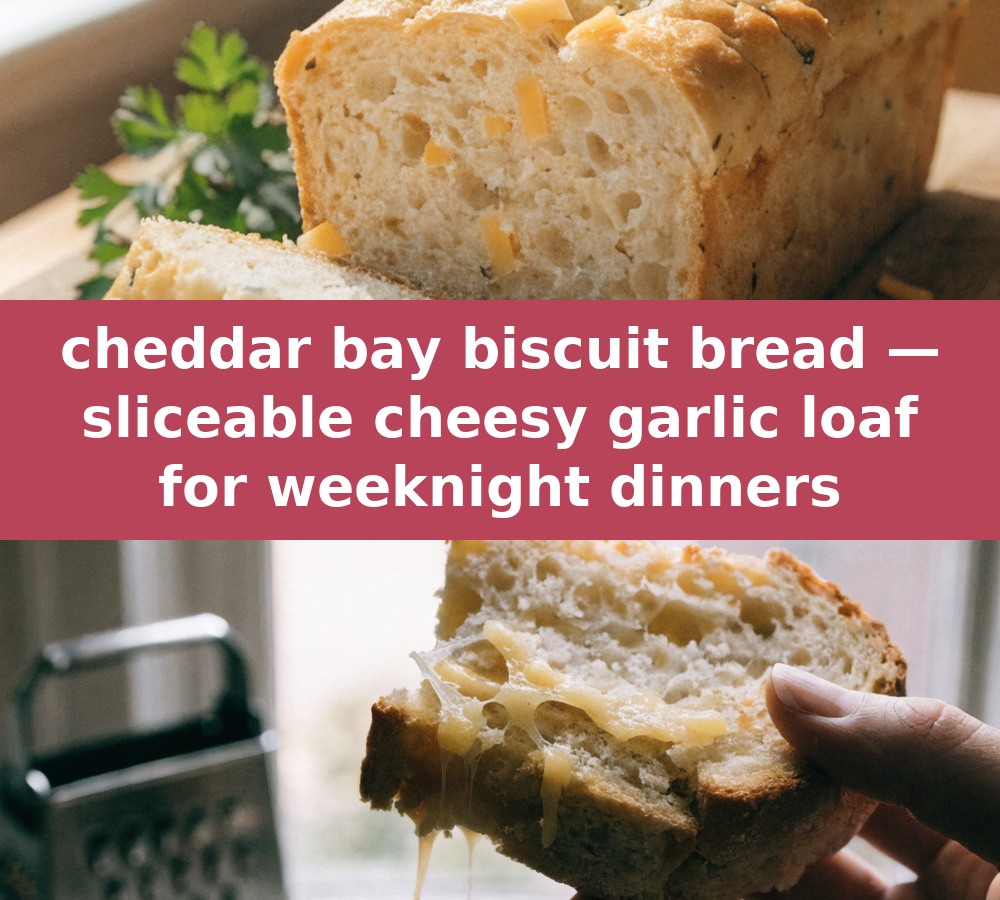
I started baking this cheddar bay biscuit bread when I wanted the cheesy, garlicky biscuit flavor in a sliceable loaf that would go beside pasta or soup. The cheddar bay biscuit bread captures that combination of tender, slightly flaky crumb and a buttery, garlicky crust—so I kept tweaking the liquid-to-flour ratio until the center never turned gummy. If you like the classic biscuits but want something you can slice, spread, and share, this is for you.
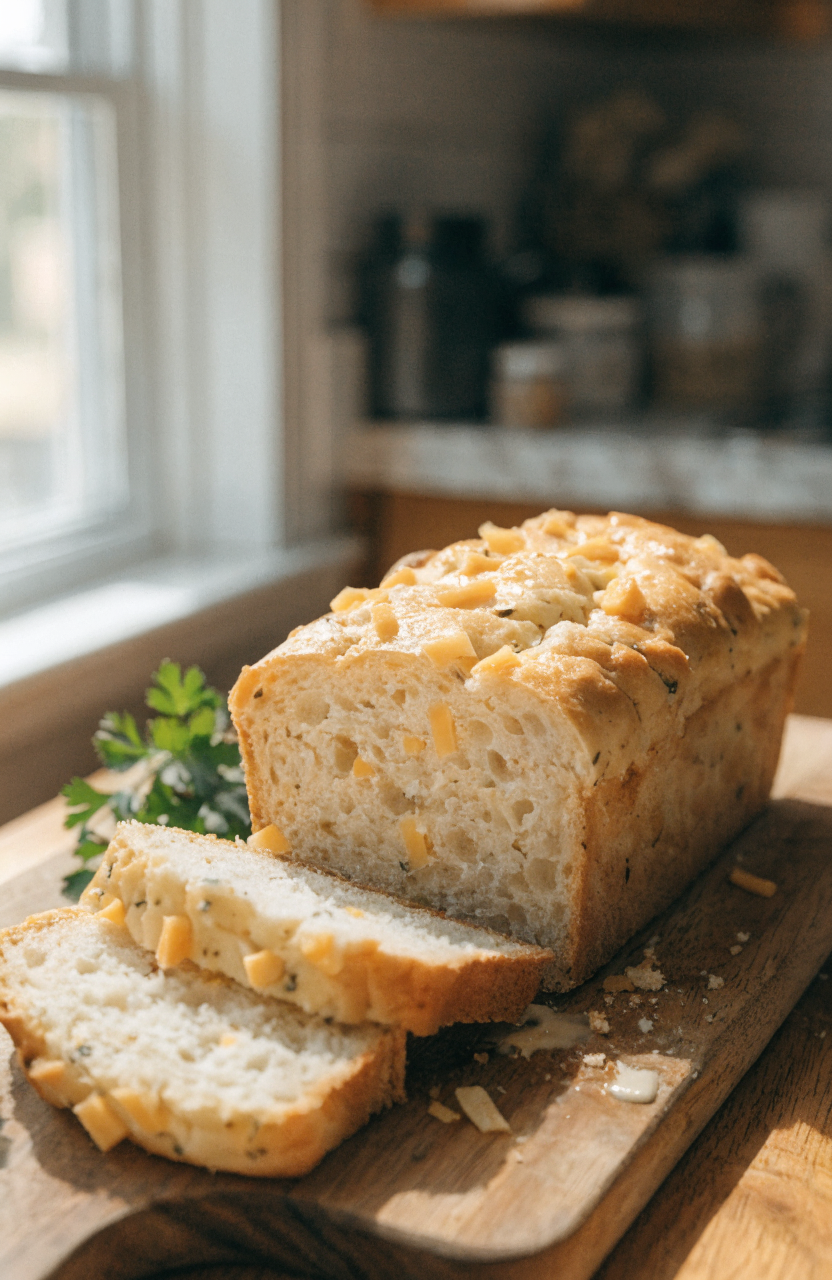
Why this cheddar bay biscuit bread works
The trick to making cheddar bay biscuit bread that tastes like the biscuits is treating it like a quick drop-biscuit loaf rather than a traditional sandwich bread. That means a higher proportion of fat and cheese to flour, and a quick-acting leavening system (baking powder) to create lift without long rising times. In testing I found two practical changes that mattered: cutting the buttermilk slightly so pockets of steam form and set rather than turning the middle gummy, and resting the loaf loosely tented for 10 minutes after baking so the interior finishes through carryover heating without over-browning the crust. Together these adjustments give a tender, airy crumb and a crisp, garlic-butter edge that echoes the original biscuit texture.
Key takeaways
- Use a drop-biscuit-style batter (thick, spoonable) rather than a pourable cake batter.
- Under-add liquid slightly and allow a short rest after baking to prevent a gummy center.
- Brush hot bread with garlic-butter immediately for the signature crust and parsley freshness.
Ingredients you’ll need and what to substitute
The main components are all-purpose flour, baking powder for lift, cold butter for layered tender texture, sharp cheddar for flavor, and buttermilk for tang and acidity. I use cold butter cut into small cubes and fold it in like a biscuit so you retain little pockets of fat that create lift and a tender crumb. If you don’t have buttermilk, make a quick substitute by adding 1 tablespoon white vinegar to milk and letting it sit 5 minutes; that works fine but may slightly alter the flavor. For a milder cheese, use mild cheddar, or swap up to half the cheddar for Monterey Jack for a creamier melt. If you need a dairy-free option, use a dairy-free butter and a plant-based milk with 1 tablespoon vinegar (not tested here, expect texture differences).
Measure flour with a spoon-and-level method; too much packed flour will stiffen the batter and dry the bread. Shredded cheese should be freshly shredded from a block for the best melt and flavor—pre-shredded cheese often has anti-caking agents that can affect texture.
Equipment
You don’t need specialized gear. Use a 9×5-inch loaf pan for a standard-sized loaf; if you only have an 8½×4½ pan, watch the baking time as a slightly taller loaf may need extra minutes. A box grater, a pastry cutter (or two knives), a large mixing bowl, and an instant-read thermometer are helpful. I often bake this on a sheet pan in case of overflow from overzealous batter—in testing that saved a messy oven.
How to make cheddar bay biscuit bread
Prepare the pan and dry mix
Preheat your oven to 375°F. Line a 9×5-inch loaf pan with parchment leaving a 1-inch overhang on the short sides, or grease and flour the pan. In a large bowl whisk together 2 cups all-purpose flour, 1 tablespoon baking powder, 1 teaspoon kosher salt, 1 teaspoon garlic powder, 1 tablespoon granulated sugar, and 2 teaspoons dried parsley. These dry flavors mimic the classic biscuit mix.
Cut in the butter and add cheese
Cut 6 tablespoons cold unsalted butter into small cubes and work them into the dry mix with a pastry cutter or two knives until the mixture resembles coarse crumbs with some pea-sized bits of butter remaining. Stir in 1 1/2 cups (about 6 ounces) shredded sharp cheddar cheese—reserve 1/4 cup for the top. The small butter pieces create pockets of steam while baking that give a biscuit-like crumb.
Mix the wet ingredients and form a thick batter
In a separate bowl whisk together 1 cup buttermilk and 1 large egg until combined. Pour the wet ingredients into the dry and fold gently with a spatula until a thick, spoonable batter forms; do not overmix. The batter should be thicker than a cake batter but soft enough to spoon into the pan. If it’s too stiff, add up to 1 tablespoon additional buttermilk. If it seems runny, sprinkle a tablespoon of flour and fold once.
Assemble and bake
Spoon the batter into the prepared loaf pan and smooth the top lightly. Sprinkle the reserved 1/4 cup cheddar over the surface. Bake at 375°F for 28–34 minutes, or until the top is golden brown and an instant-read thermometer inserted into the center reads 200–205°F. If the top browns too quickly, loosely tent the loaf with foil for the last 8–10 minutes.
Finish with garlic-butter and rest
While the bread bakes, melt 3 tablespoons unsalted butter and stir in 1/2 teaspoon garlic powder and 1 teaspoon finely chopped fresh parsley. When the loaf comes out of the oven, brush the garlic-butter over the hot top and sides. Tent the loaf loosely with foil and let rest in the pan for 10 minutes; this short rest reduces a gummy center while keeping the crust crisp. Then lift the loaf out with the parchment and cool on a rack for another 10 minutes before slicing.
Things I learned the hard way
- If you add too much buttermilk the middle stays gummy—start with 1 cup and add only a tablespoon at a time if needed.
- Pre-shredded cheese can make the batter wetter; fresh-shred for best texture.
- Skipping the 10-minute tented rest after baking often produced a center that felt underdone; the rest allows carryover heat to finish the crumb.
- Using cold butter and minimal mixing keeps the crumb light—if you overwork the batter it becomes dense.
- If the top browns fast, tent with foil; better to protect the crust than to sacrifice internal doneness.
- My first attempt used a standard cake batter ratio and it flattened—switching to the drop-biscuit method fixed the texture completely.
Variations to try
- Herbed cheddar: Add 1 teaspoon chopped fresh chives and 1/2 teaspoon dried thyme to the batter; no timing change required.
- Spicy cheddar bay loaf: Stir 1/4 teaspoon cayenne or a chopped jalapeño into the wet mix; bake as directed and expect a touch more moisture from peppers.
- Parmesan-crusted: Replace 1/2 cup cheddar with 1/2 cup finely grated Parmesan and sprinkle extra on top; the crust comes out sharper and slightly crisper.
- Mini loaves or muffins: Spoon into a 12-cup muffin tin and bake 14–18 minutes at 400°F; watch for faster browning and check doneness earlier.
Storage, freezing, and reheating
Store leftover cheddar bay biscuit bread wrapped tightly at room temperature for up to 2 days or refrigerated for up to 5 days in an airtight container. For freezing, slice the loaf and store slices in a single layer on a sheet tray in the freezer for 1 hour, then transfer to a freezer bag for up to 3 months. Reheat frozen or refrigerated slices in a 350°F oven for 8–12 minutes (from refrigerated) or 15–18 minutes (from frozen) until warmed through and the crust crisps. The interior will be a touch drier after refrigeration; a quick brush of melted butter before reheating helps restore moisture.
What to serve with cheddar bay biscuit bread
This loaf pairs well with saucy pastas, tomato-based soups, chili, roasted chicken, or a simple green salad. Try it alongside marinara-topped meatballs for a casual dinner, or slice and serve with herb butter and a bowl of creamy clam chowder for a cozy meal. It also works as an open-faced sandwich base with roasted vegetables or sliced turkey.
Frequently asked questions
Can I make this ahead of time? Yes. Bake the loaf, cool completely, wrap tightly, and refrigerate for up to 2 days; rewarm in the oven before serving to refresh the crust. For longer storage freeze slices as described above.
Why is my center gummy? Too much liquid or insufficient resting is usually the cause. Reduce buttermilk by a tablespoon or two and allow the tented rest after baking so carryover heat finishes the crumb.
Can I use whole-wheat flour? You can substitute up to half the all-purpose flour with whole-wheat, but the loaf will be denser and may need an extra minute or two in the oven; consider adding 1–2 tablespoons extra buttermilk to compensate.
Can I make this dairy-free? Use a plant-based butter and 1 cup unsweetened soy or oat milk with 1 tablespoon vinegar as a buttermilk substitute; expect some texture change and slightly less rise.
How do I stop the top from burning? Tent the loaf loosely with foil once it reaches a deep golden color, or move it to a lower oven rack for the final 8–10 minutes.
Closing
The cheddar bay biscuit bread takes the best parts of the classic biscuit—cheese, garlic, butter—and turns them into a shareable loaf you can slice and serve with soups, pastas, or as a snack; the cheddar bay biscuit bread is a practical and flavorful twist I keep on my weeknight rotation.