

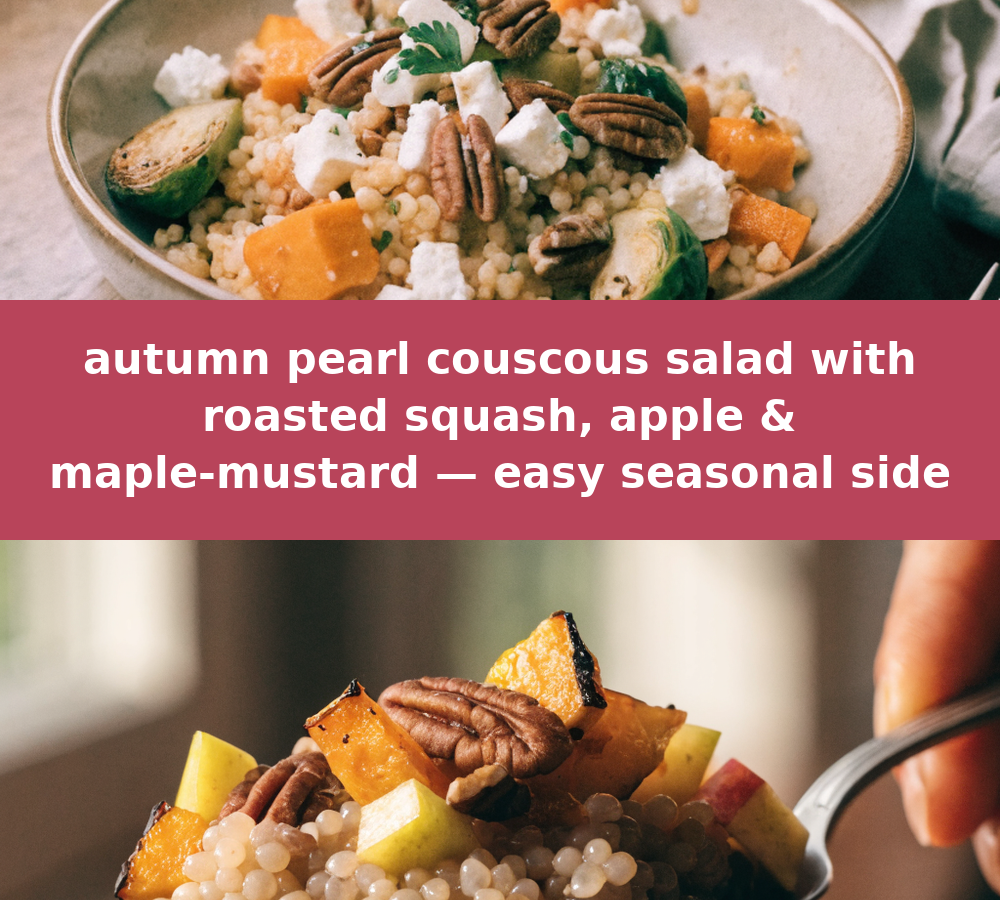
I first made this autumn pearl couscous salad when I wanted a seasonal side that felt special but didn’t require babysitting—think tender pearl couscous studded with roasted squash, tart apple, toasted pecans, and a bright maple-mustard dressing. The autumn pearl couscous salad in the recipe below balances warm-roasted textures with a chilled dressing so the couscous soaks up flavor without going mushy; keep reading if you want reliable timing and the small tweaks I learned the hard way.
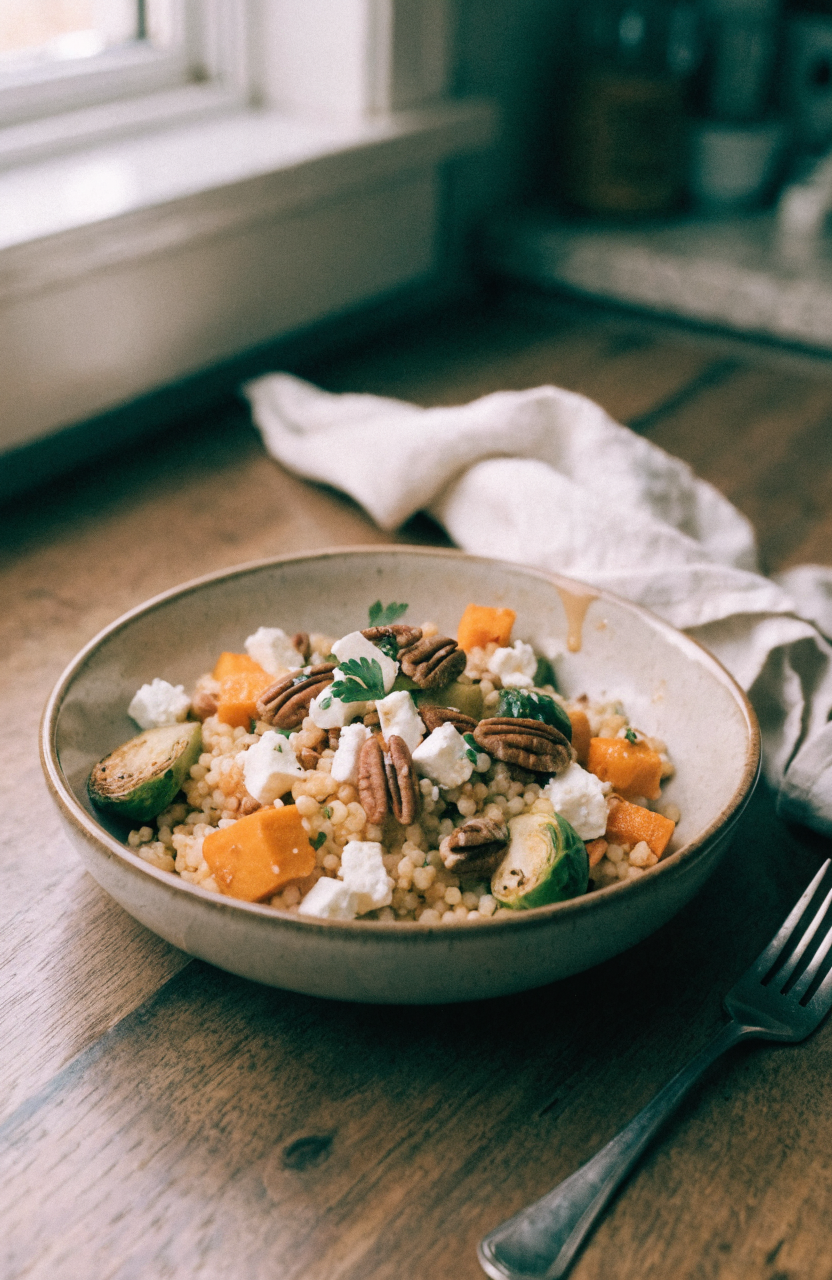
Why this autumn pearl couscous salad works
The two tricks that make this autumn pearl couscous salad reliable are the couscous ratio and the warm-dressing finish. I use 1 cup of pearl couscous to 1 1/4 cups of liquid, which keeps the pearls plump and slightly chewy rather than soft and falling apart. Roasting the fall vegetables at a high temperature concentrates their flavor and gives crisp edges that contrast the tender pearls. Finally, pouring a warm dressing over still-warm couscous helps the grains absorb flavor without becoming soggy, then cooling the whole salad in the refrigerator preserves the roasted texture.
During testing I initially followed a recipe that called for adding a cold vinaigrette to cooled couscous; the result was bland and the pearls stayed separate. Warming the dressing and letting the couscous absorb it for 10 minutes made a noticeable difference in seasoning depth. I also adjusted roasting time for squash and Brussels sprouts so both reach the same caramelized edge without turning to mush.
Key takeaways
- Use a 1:1.25 couscous-to-liquid ratio for tender but intact pearls.
- Roast vegetables at 425°F for caramelized edges and texture contrast.
- Pour warm dressing over warm couscous so it absorbs flavor, then chill to set.
Ingredients you’ll need and what to substitute
This autumn pearl couscous salad relies on a few seasonal highlights: pearl (Israeli) couscous for chew, sweet winter squash for caramelized color, apple or pear for bite, and toasted nuts for crunch. Use olive oil and a maple-mustard vinaigrette to tie the sweet and tart elements together.
Substitutions that work well: swap butternut squash for sweet potato (roast time is similar), use toasted walnuts instead of pecans for a slightly more bitter note, and replace honey with maple syrup or a neutral brown rice syrup if you avoid refined sugars. If you prefer a citrus tang instead of maple, stir in 2 tablespoons fresh orange juice and omit 1 tablespoon of apple cider vinegar; this brightens the salad but reduces shelf life slightly.
Measure the couscous dry and toast it briefly in the pan for a nuttier flavor if you like; however, do not overcook pearl couscous—its texture is part of the appeal. If using pre-cooked or leftover pearls, reduce the dressing amount by about a quarter so the salad doesn’t become soggy.
Equipment
- Large rimmed sheet pan (13×18-inch) for even roasting.
- Medium saucepan with lid (2–3 quart) for cooking 1 cup pearl couscous.
- Large mixing bowl for combining salad and tossing dressing.
- Skillet or small pan for toasting nuts (optional) and warming dressing.
How to make autumn pearl couscous salad
Prepare the vegetables
Preheat your oven to 425°F and line a rimmed baking sheet with parchment. Peel and cut 1 small butternut squash (about 1 pound) into 1/2-inch cubes and trim and halve 10 ounces of Brussels sprouts. Toss the squash and sprouts with 2 tablespoons olive oil, 1/2 teaspoon kosher salt, 1/4 teaspoon black pepper, and 1/2 teaspoon ground cinnamon. Spread them in a single layer—crowding causes steaming, which prevents browning. Roast for 22–28 minutes, stirring once halfway through, until edges are caramelized and vegetables are tender but not falling apart.
Cook the pearl couscous
While the vegetables roast, bring 1 1/4 cups low-sodium vegetable broth or water to a simmer in a medium saucepan. Stir in 1 cup pearl couscous and 1 tablespoon olive oil, cover, and remove from heat. Let sit for 8–10 minutes, then fluff with a fork. Taste a pearl for chew; pearls should be tender with a slight bite. If they need 1–2 more minutes, return to low heat briefly with the lid on, watching closely.
Make the warm maple-mustard dressing
In a small skillet over medium-low heat, combine 3 tablespoons olive oil, 2 tablespoons pure maple syrup, 1 tablespoon Dijon mustard, 1 tablespoon apple cider vinegar, 1/2 teaspoon kosher salt, and 1/4 teaspoon black pepper. Warm gently—do not boil—until the mixture is glossy and slightly thickened, about 2 minutes. Remove from heat.
Tossing and finishing
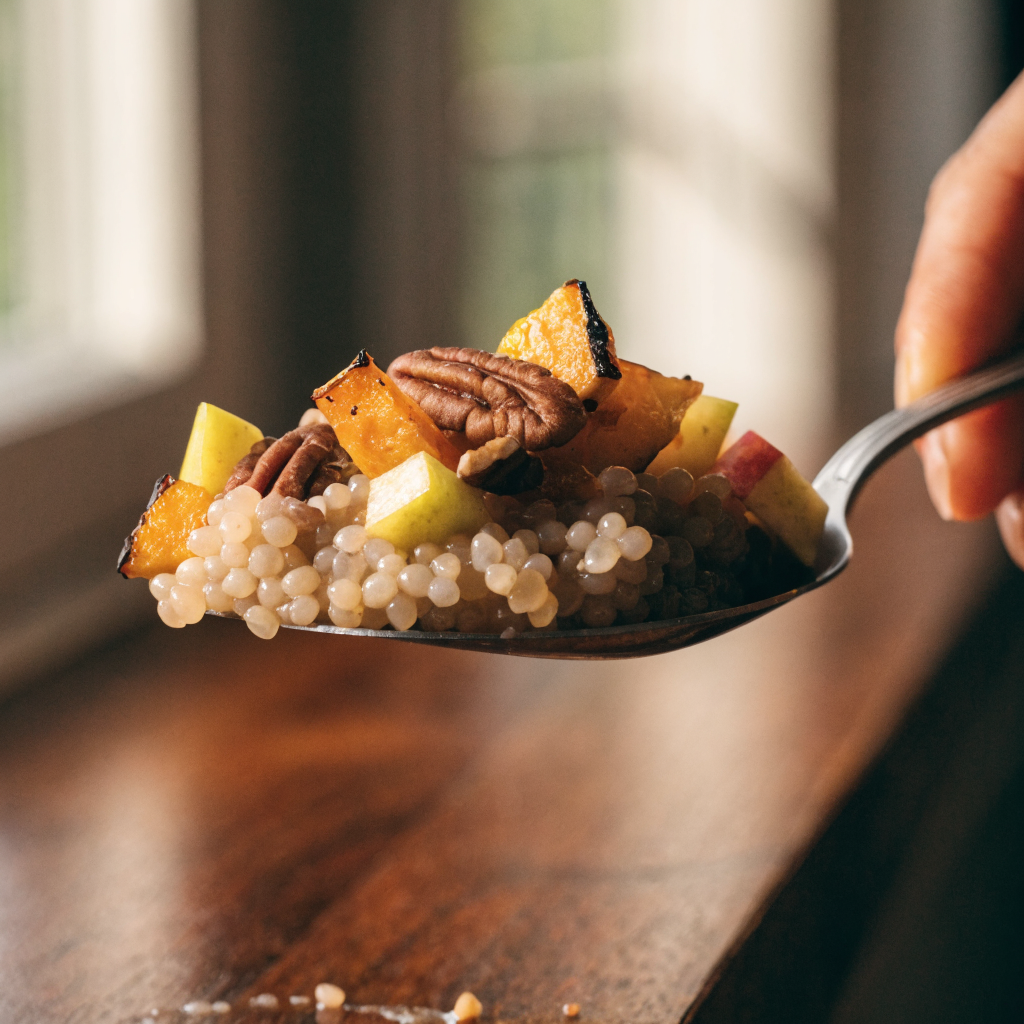
Place the warm couscous in a large mixing bowl and pour the warm dressing over it; stir gently so pearls absorb the dressing for 8–10 minutes. Add the roasted squash and Brussels sprouts, 1 large diced crisp apple (such as Honeycrisp), 1/3 cup crumbled feta cheese, and 1/2 cup toasted pecans. Add 2 tablespoons chopped fresh parsley and toss gently. Taste and adjust salt and pepper. Chill the salad for at least 20 minutes to let flavors meld; serve chilled or at cool room temperature.
Key sensory cues: the couscous will smell faintly sweet and savory after dressing, the squash should have lightly caramelized edges, and the apple will add a crisp, juicy counterpoint. If the salad seems dry after chilling, drizzle up to 1 tablespoon extra olive oil and toss.
Things I learned the hard way
- Don’t use too much liquid for pearl couscous—1 1/4 cups per 1 cup couscous keeps pearls intact. I overcooked once and the salad went mushy; reducing the liquid solved it.
- Roast vegetables at 425°F for browning—lower temps gave me bland, soft vegetables.
- Toast the nuts in a dry skillet until fragrant, about 3–4 minutes, to avoid stale texture; watch carefully as they burn fast.
- Pour warm dressing over warm couscous; cold dressing doesn’t penetrate the pearls and leaves the salad under-seasoned.
- Cut uniform squash pieces so everything finishes roasting at the same time; mixed sizes caused some mushy chunks.
Variations to try
- Autumn grain bowl: Swap pearl couscous for farro (use 1 cup farro to 2 1/2 cups liquid and simmer 20–25 minutes) for a nuttier texture and longer chew.
- Herby green version: Fold in 2 cups chopped kale massaged with 1 teaspoon olive oil; massage before adding and omit the feta for a milder finish. No timing change needed.
- Vegan swap: Omit feta and replace with 1/4 cup toasted sunflower seeds and a pinch of nutritional yeast for savory depth; adjust salt as needed.
- Maple-citrus dressing: Replace 1 tablespoon apple cider vinegar with 2 tablespoons fresh orange juice and reduce maple syrup to 1 tablespoon to brighten the salad; serve sooner as citrus fades over time.
Storage, freezing, and reheating
Store the autumn pearl couscous salad in an airtight container in the refrigerator for up to 3 days. Keep any extra dressing separate if you plan to store longer or if the salad will sit for hours—this preserves the nuts’ crunch. Do not freeze the finished salad; freezing ruins the texture of roasted vegetables and apples. To reheat, warm a single portion in a microwave for 45–60 seconds if you prefer it warm, then add a splash of water or extra olive oil to loosen. For best texture, serve chilled or at cool room temperature.
What to serve with autumn pearl couscous salad
This salad pairs well with roasted chicken breasts, pan-seared salmon, or a simple legume stew for a vegetarian meal. Serve alongside warm flatbreads or a hearty lentil soup to make a full autumn dinner. For a casual buffet, place it next to a green salad and roasted root vegetables.
Frequently asked questions
Can I make this salad ahead of time? Yes—prepare and refrigerate up to 24 hours ahead; add nuts and apples close to serving for best texture. The salad will absorb more dressing over time, so store extra dressing separately if you want to preserve brightness.
Can I use regular couscous instead of pearl couscous? You can, but regular (Israeli) couscous is different in size and texture; if using small regular couscous, reduce the liquid to 1 cup per 1 cup couscous and watch closely to avoid mushiness.
How do I keep the apples from browning? Toss apple pieces in 1 teaspoon lemon juice immediately after cutting; the acidity slows oxidation and won’t noticeably change flavor in this salad.
Is this salad suitable for meal prep? It’s good for short-term meal prep—store in the fridge up to 3 days, but keep crunchy ingredients like nuts and apples separate if you want to preserve maximum texture.
Can I double the recipe? Yes; roast vegetables on two sheet pans or in batches to avoid crowding and follow the same couscous ratio. Toss everything together in a large bowl after the warm-dressing step.
Closing
This autumn pearl couscous salad brings together roasted fall vegetables, crisp fruit, and toasted nuts with a warm maple-mustard dressing that the pearls soak up—it’s a reliable, flavorful side that I now make every season when squash appears at the market.